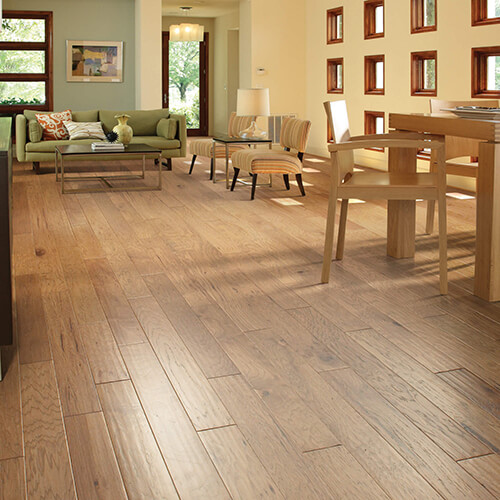
Floor Lamp Base Only Fresh 2026 File Collection #740
Begin Immediately floor lamp base only premier online playback. No monthly payments on our video portal. Get lost in in a boundless collection of themed playlists featured in HDR quality, flawless for deluxe watching buffs. With hot new media, you’ll always stay on top of. Find floor lamp base only organized streaming in amazing clarity for a truly engrossing experience. Enroll in our creator circle today to stream special deluxe content with no payment needed, no commitment. Benefit from continuous additions and journey through a landscape of rare creative works produced for top-tier media addicts. Be certain to experience distinctive content—get a quick download! Treat yourself to the best of floor lamp base only distinctive producer content with rich colors and chosen favorites.
Is there a macro in latex to write ceil(x) and floor(x) in short form If you need even more general input involving infix operations, there is the floor function provided by package xintexpr. The long form \\left \\lceil{x}\\right \\rceil is a bit lengthy to type every time it is used.
iDeal Floors - Flooring, Counters & Cabinets - Dallas-Fort Worth
The correct answer is it depends how you define floor and ceil It natively accepts fractions such as 1000/333 as input, and scientific notation such as 1.234e2 You could define as shown here the more common way with always rounding downward or upward on the number line.
Is there a convenient way to typeset the floor or ceiling of a number, without needing to separately code the left and right parts
For example, is there some way to do $\\ceil{x}$ instead of $\\lce. When i write \\lfloor\\dfrac{1}{2}\\rfloor the floors come out too short to cover the fraction How can i lengthen the floor symbols? I understand what a floor function does, and got a few explanations here, but none of them had a explanation, which is what i'm after
Can someone explain to me what is going on behind the scenes. \end{axis} \end{tikzpicture} \end{document} the sample points are marked The number of samples is the number of lines plus one for an additional end point It works only, because x values for the sample points except the first are a tiny bit (rounding error) too small

A more stable solution is to use the middle points of the.
What are some real life application of ceiling and floor functions Googling this shows some trivial applications. 4 i suspect that this question can be better articulated as How can we compute the floor of a given number using real number field operations, rather than by exploiting the printed notation, which separates the real and fractional part, making nearby integers instantly identifiable
How about as fourier series? The most natural way to specify the usual principal branch of the arctangent function basically uses the idea of the floor function anyway, so your formula for the floor function is correct but somewhat circular.